AddnAide Private Pay Pilot
Over three weeks, I ran discovery for AddnAide's private-pay pilot and then built it as a working demo. The product owner left with a signed scope, an estimate read from the code, and 17 screens that match the story cards the estimate was built from.
See case study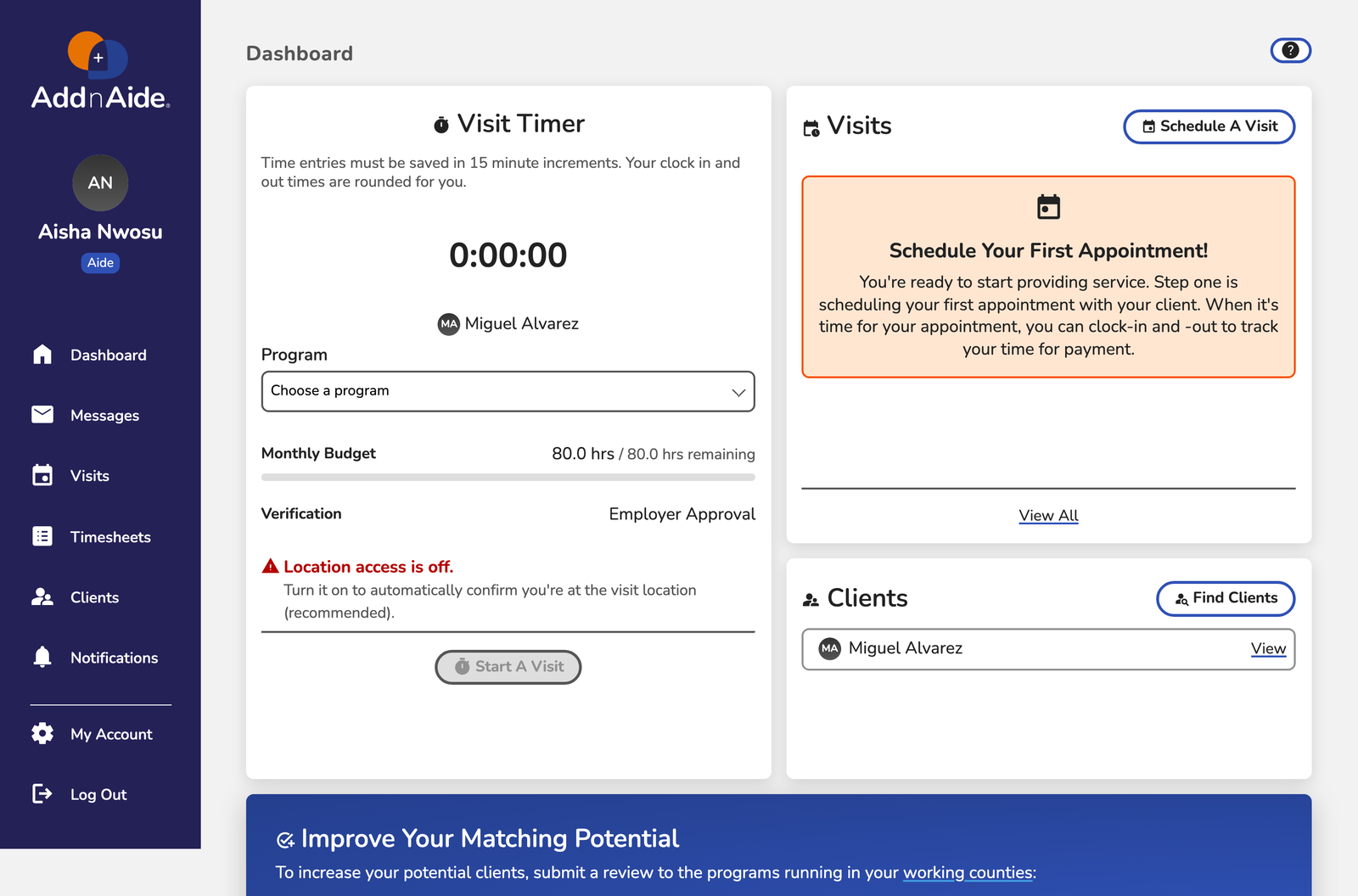
My role
I led discovery for the pilot, running daily working sessions with AddnAide's product owner and logging every decision before it became a story card. From the cards I outlined each screen for the generated HTML wireframes and built the estimate by reading the existing codebase. Then I built the demo screens in Phoenix LiveView and SCSS alongside the lead developer. Claude agents I wrote did the overnight drafting and code review, and people kept every decision and every message to the client.
Services



The problem
AddnAide was built for publicly funded care, where a care manager sets up the plan and a public program pays the caregiver. The pilot added families who pay privately. They would sign themselves up, set up care, agree on a rate with a caregiver, and get billed, with no care manager involved. The product owner needed a scope and an estimate she could defend. On most projects a mockup gets approved, a ticket gets written from memory a week later, and an estimate gets written from the ticket, and by the time anyone builds it the three no longer agree.
Solution
generated wireframes
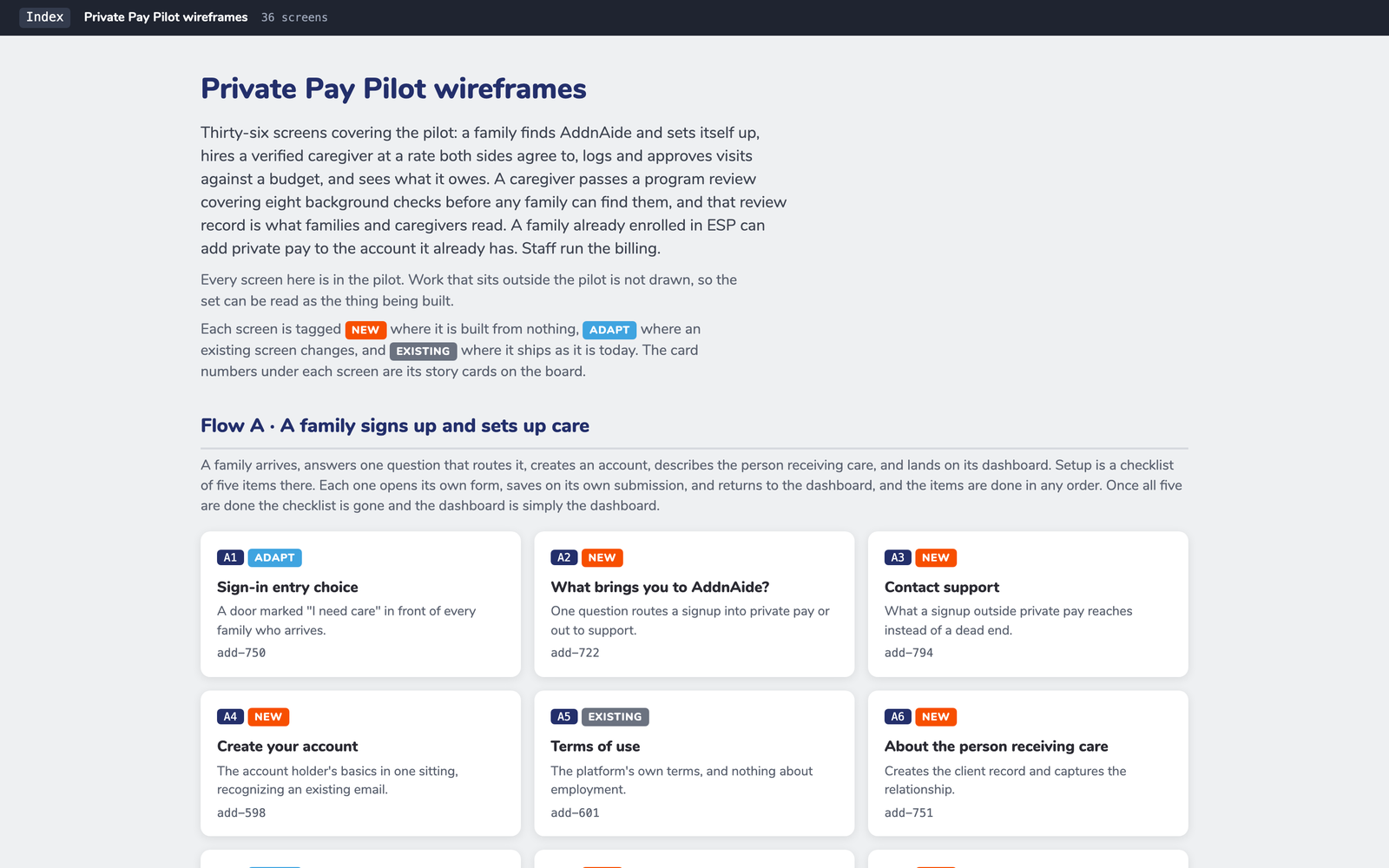
I outlined every screen in the pilot as what a person sees there and what they do, and Claude generated the HTML wireframes from those outlines. When a decision moved, I changed the outline and ran it again, which is how the set got through nine revisions in eight days. The card numbers under each screen tie it back to the story map and the estimate.
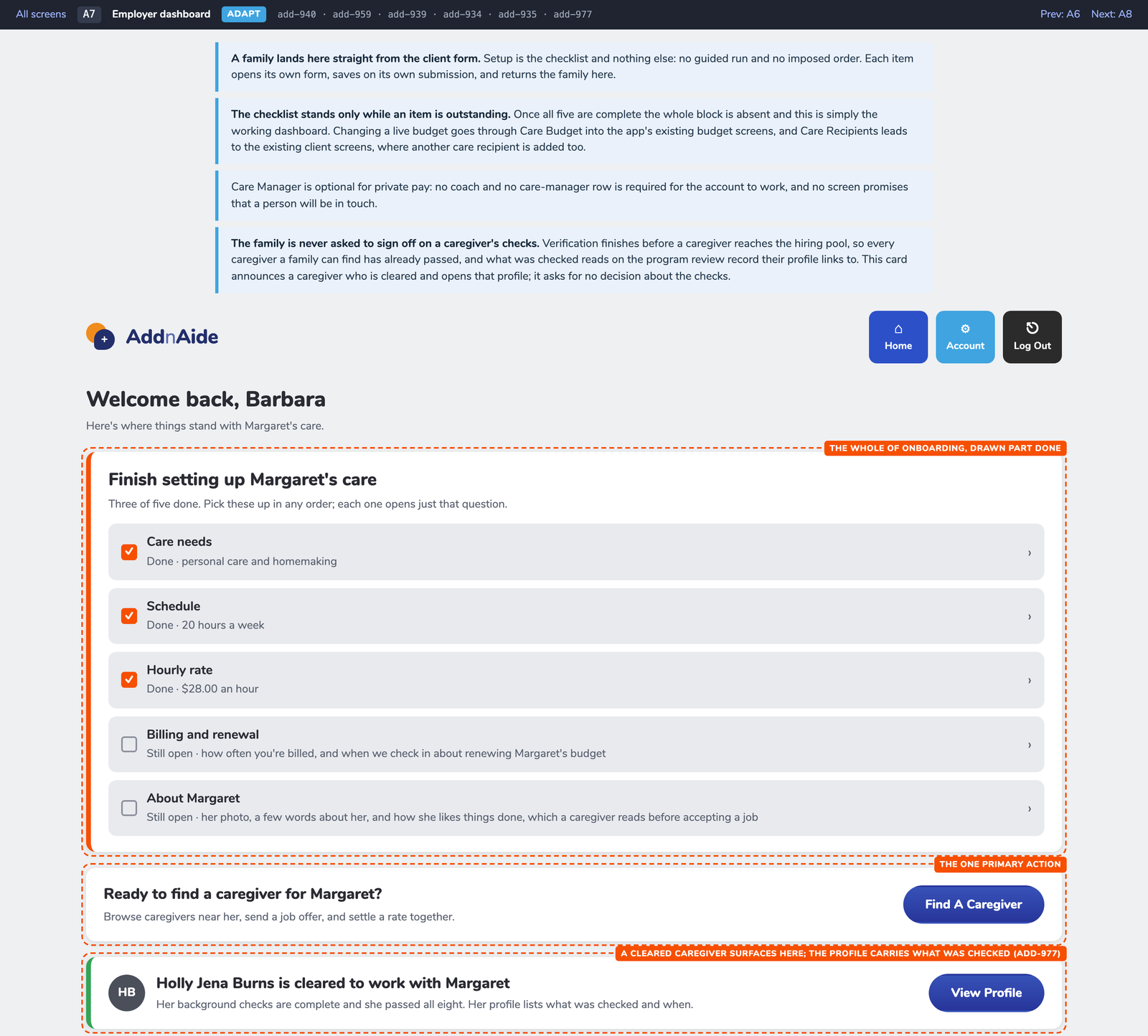
setup checklist wireframe
Notes above each wireframe record the decisions behind it. On the family's dashboard they settle that a care manager is optional for private pay, and that families are never asked to sign off on a caregiver's background checks. The product owner and the lead developer read the same page, and the card numbers across the top are the ones the estimate cites.
sign up
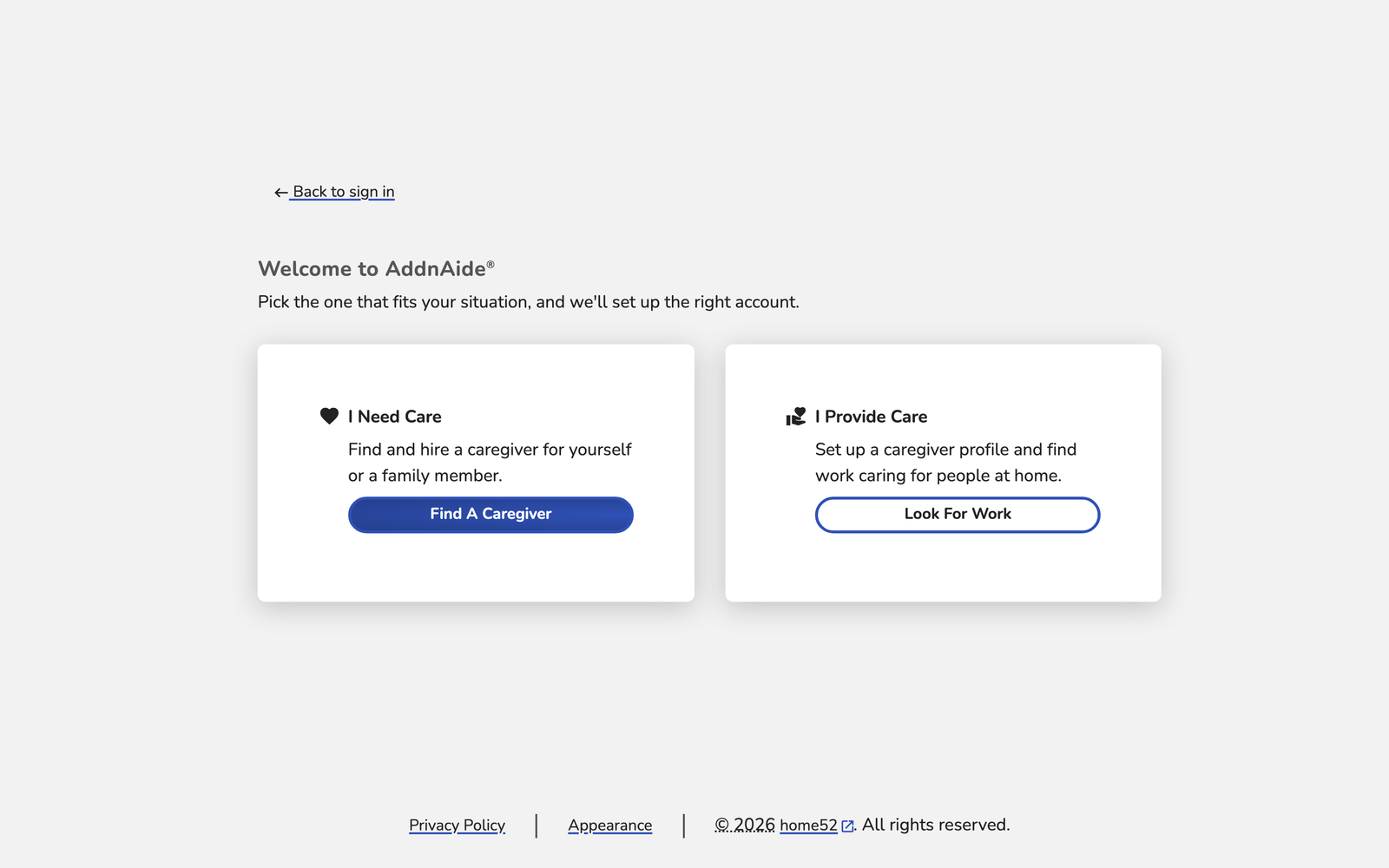
New visitors choose between I need care and I provide care, which gives private-pay families a front door of their own. A family then answers one more question that routes them into private pay, or to support if a public program already covers their care.
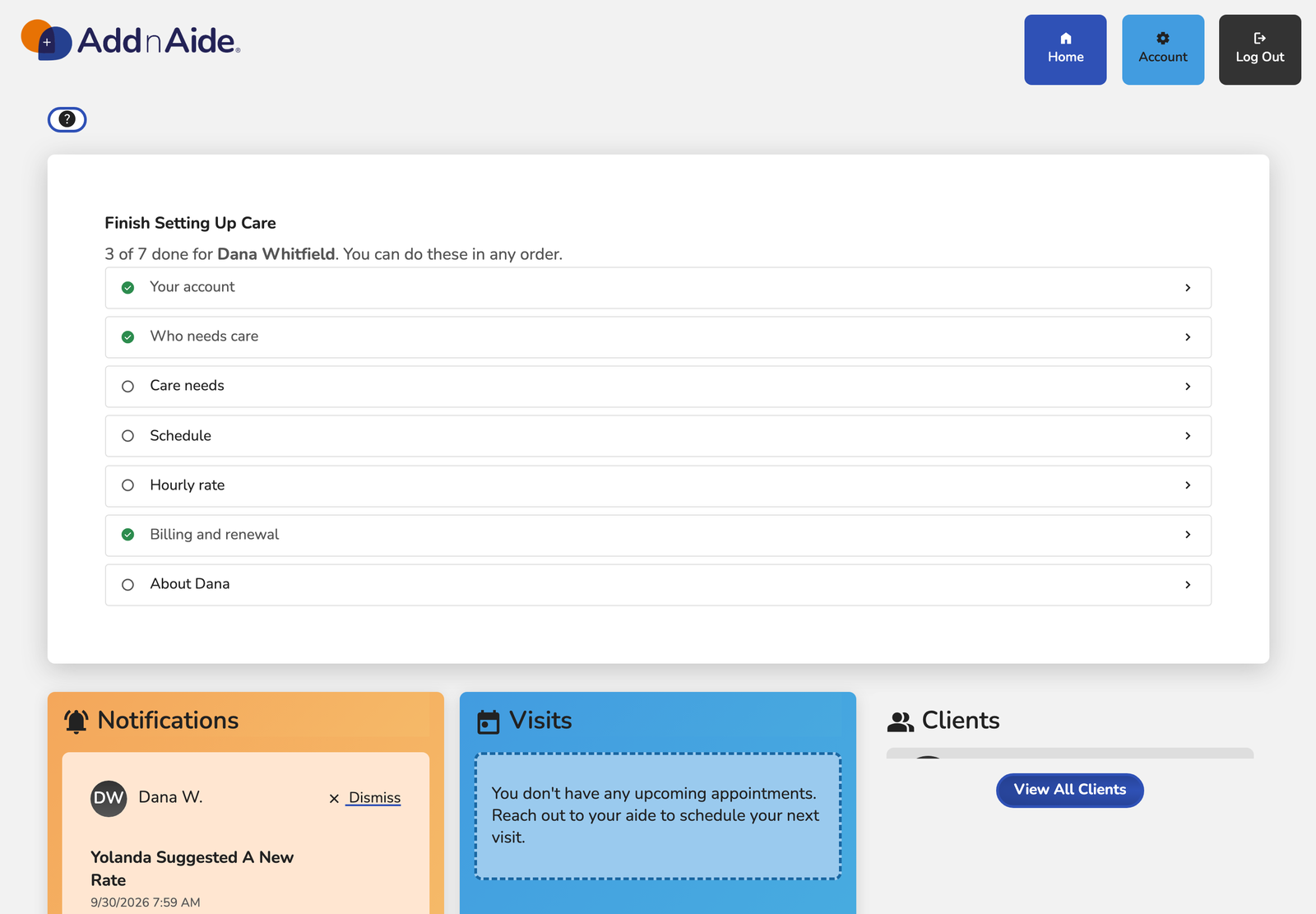
setup checklist
Discovery started with an onboarding wizard in mind, and the plan moved to a checklist on the family's dashboard. Each item opens its own short form and can be done in any order. Once everything is done, the checklist disappears and the dashboard is just the dashboard.
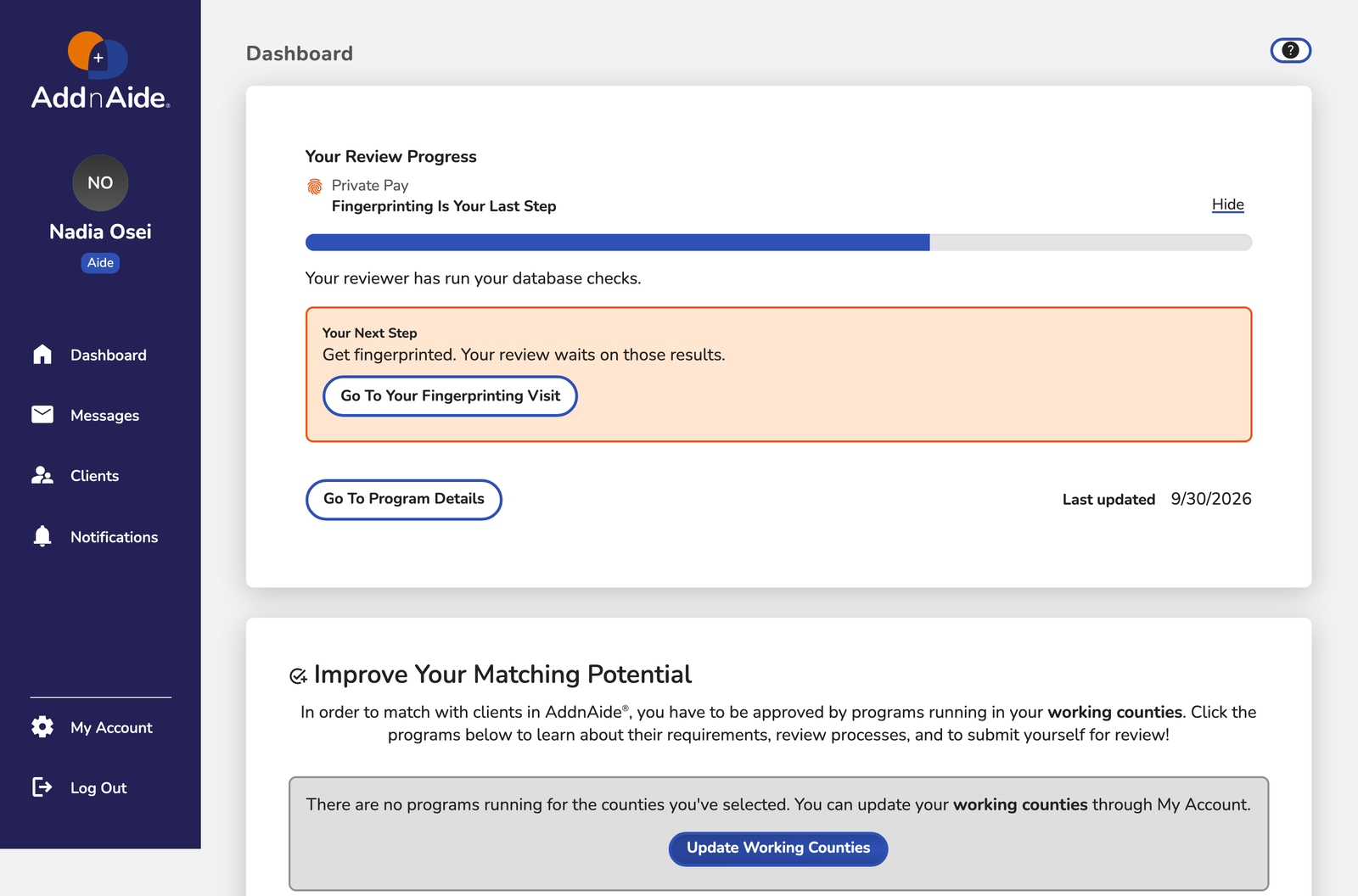
review progress
A caregiver passes a program review covering eight background checks before any family can find her. Her dashboard shows how far the review has come and names her next step, here a fingerprinting visit. Because the checks finish first, every caregiver a family sees has already passed them.
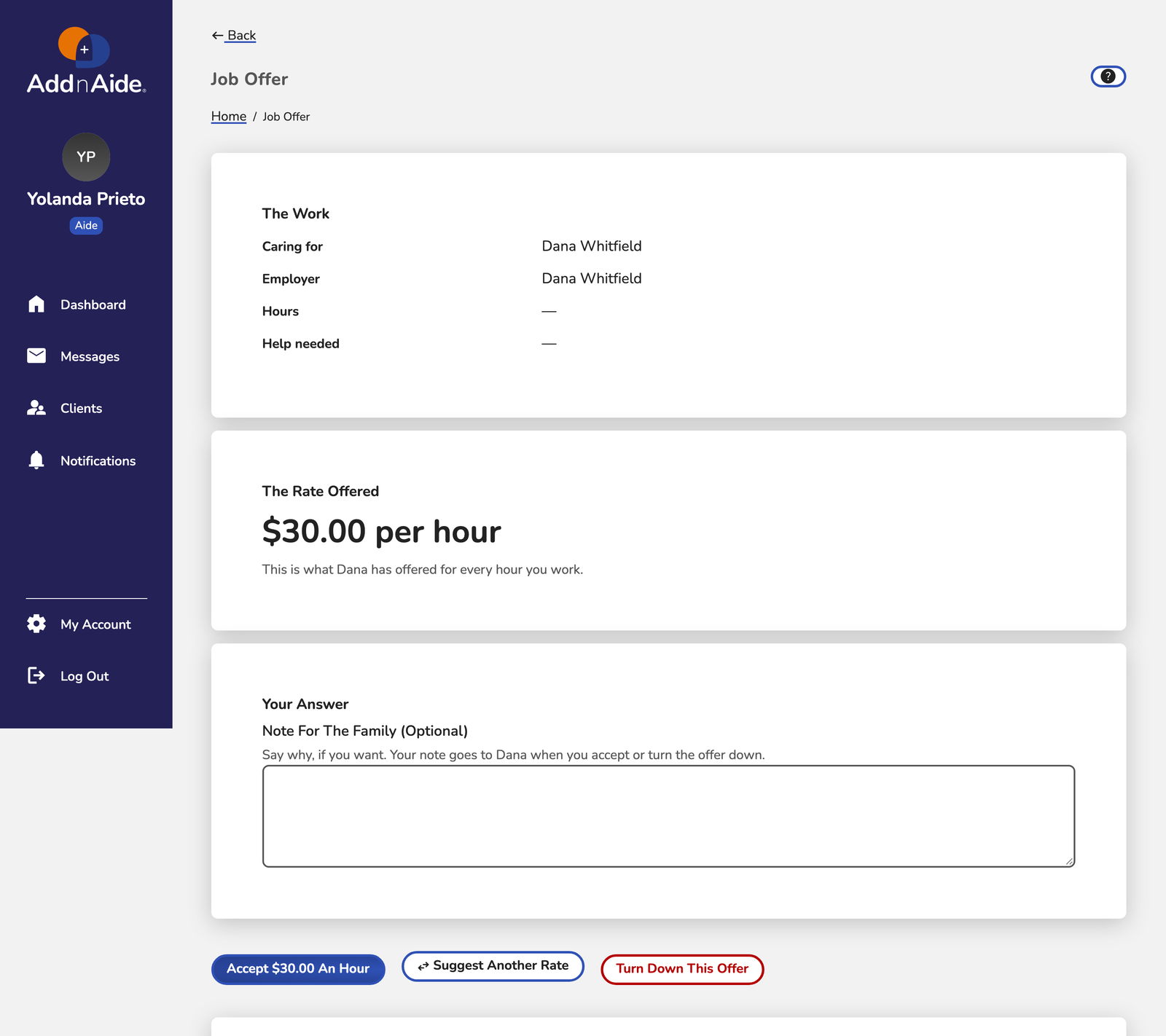
job offer
The program sets a minimum and maximum hourly rate, and each family and caregiver agree on their own rate within it. A caregiver can accept the offer, suggest another rate, or turn it down, with an optional note, and her answer shows up as a notification on the family's dashboard.
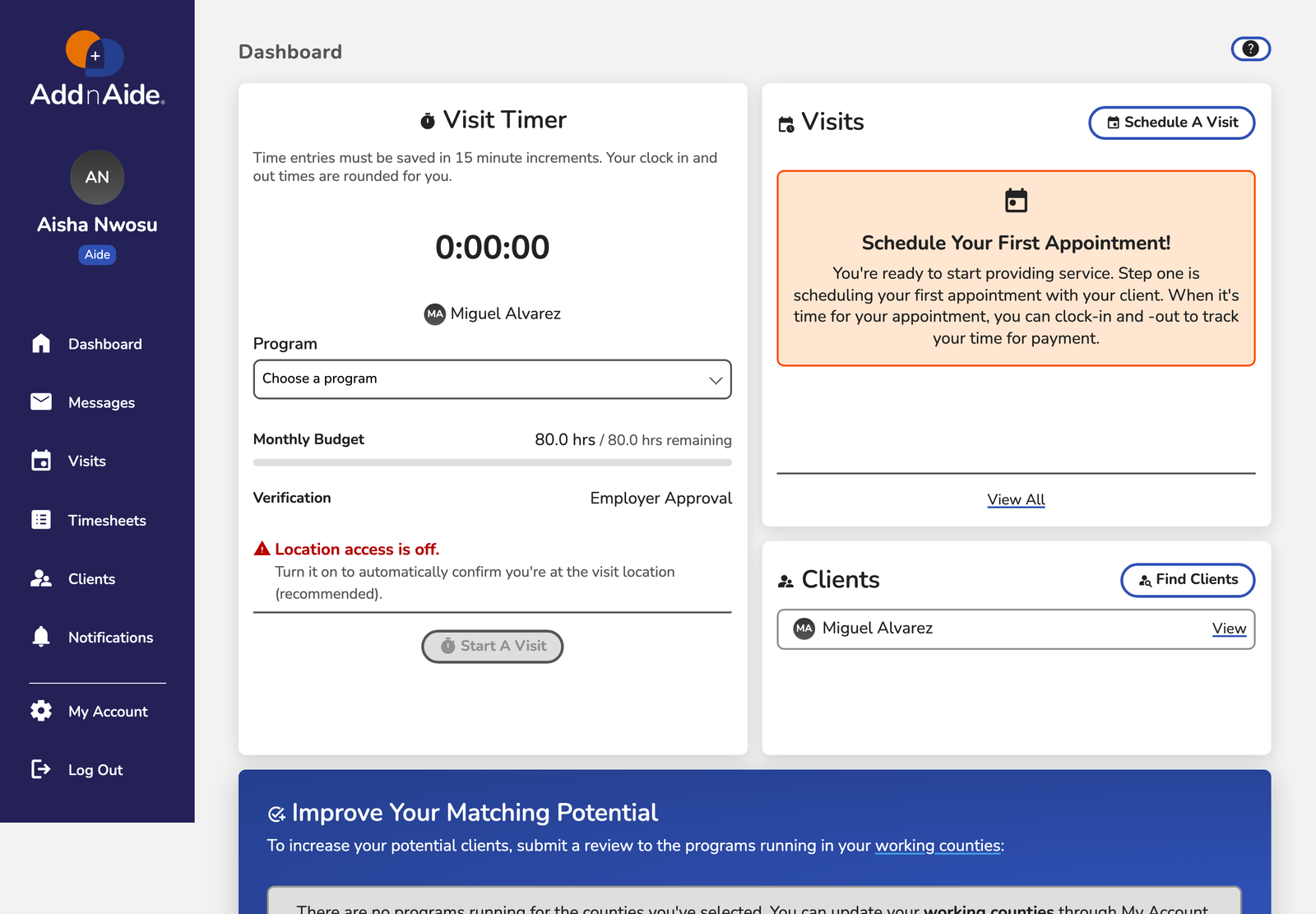
visit timer
The program picker on the timer came from the biggest late change in discovery. On July 23 we learned that families already enrolled in a publicly funded care program can pay privately at the same time, which added seven story cards and four wireframes overnight. Now a caregiver picks which program each visit counts against, and the hours draw down that program's monthly budget.
invoices
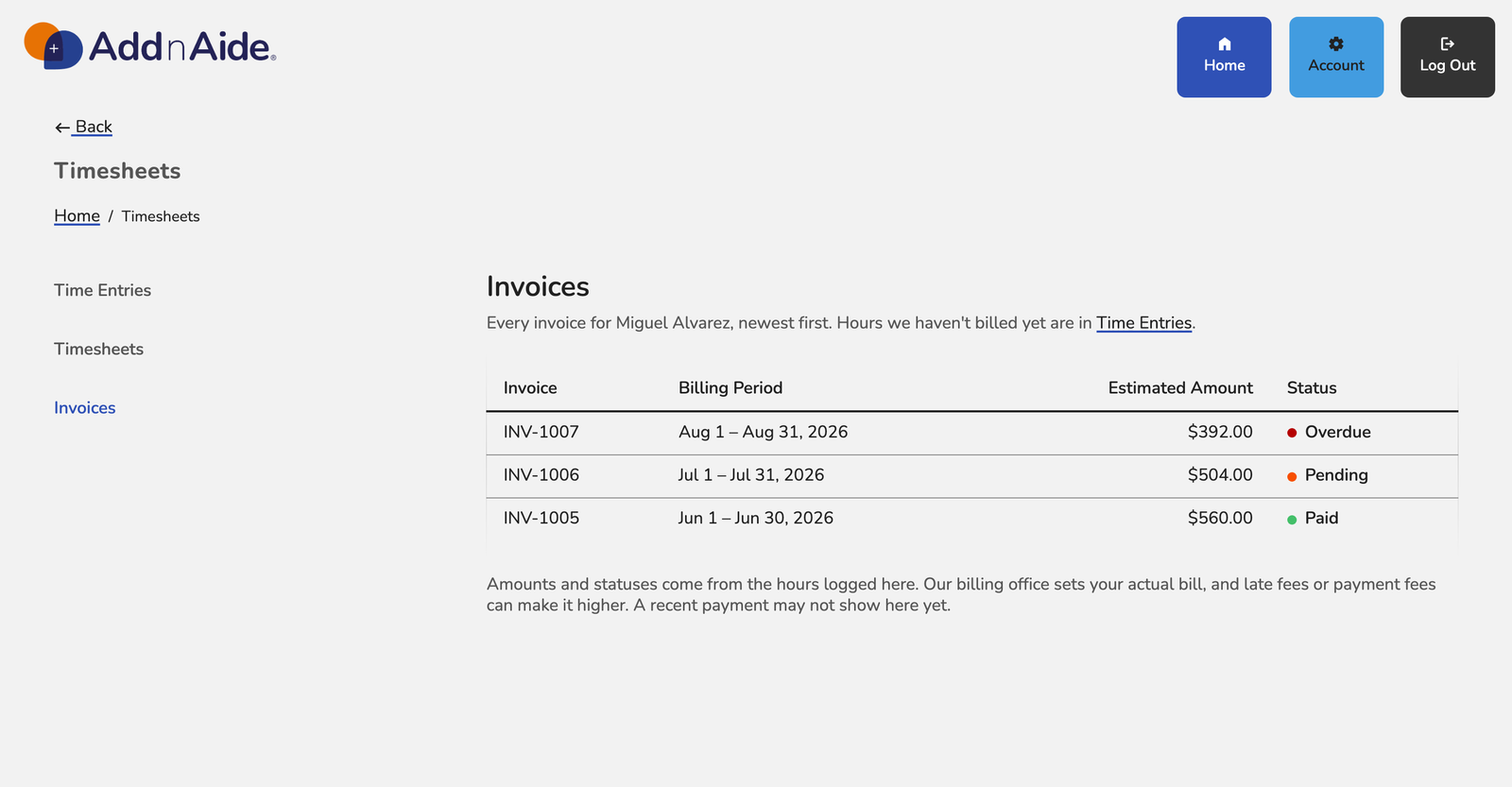
Program clients never saw a bill, so private pay needed an invoice list. The amounts are estimates from logged hours, because the Council's billing staff set the actual bill, and the note under the table says so in plain words.
Outcome
The product owner left with a signed statement of work and a scope cut from 128 mapped stories to 49 committed ones. We made the cut together on the story map, card by card, against a rule written before the session, and the other 79 stories moved to named later releases. The estimate came to about 235 hours against a 240-hour implementation budget. We built the 17 working screens in five days and demoed them on August 4, three weeks after kickoff. The clickable demo became the specification the lead developer is building the pilot against now, for an October launch.
About the client
AddnAide, from the Council on Aging of Southwest Ohio, helps older adults and their families find and hire in-home caregivers, including caregivers paid through the Council's programs for older adults.